Banking in Italy for Retirees
Banking in Italy is not just about choosing an account. It is about making rent, utilities, healthcare, tax payments, pensions, cards, direct debits and local administration work without friction.
For retirees, banking in Italy becomes important long before it feels like a financial topic. A bank account can affect rental deposits, utilities, healthcare reimbursements, condominium fees, car insurance, local taxes, ATM access, pension transfers and whether offices accept your payment method without argument.
The biggest mistake is assuming that a good card, Wise account or home-country bank will solve everything. Those tools can be useful, but long-term life in Italy often works best with a layered setup: home pension account, low-cost currency transfer option, and a practical Italian banking route for local bills and administration.
Why banking becomes a real retirement issue in Italy
Many retirees arrive with a perfectly good account in their home country and assume Italy will simply accept card payments and international transfers. That may work for hotels, restaurants, supermarkets and online bookings. Long-term life is different.
Rent deposits, utilities, condominium fees, internet contracts, insurance, car ownership, medical reimbursements, local taxes and municipal payments may all require more predictable banking arrangements. Sometimes the legal position is not the problem. The practical problem is the person, form, portal or office in front of you.
A payment method that is technically valid under SEPA rules may still create friction if a landlord, small-town utility office, insurance agent or administrator is used to Italian IBANs, Italian debit cards, Italian direct debit forms or bank statements with local formatting.
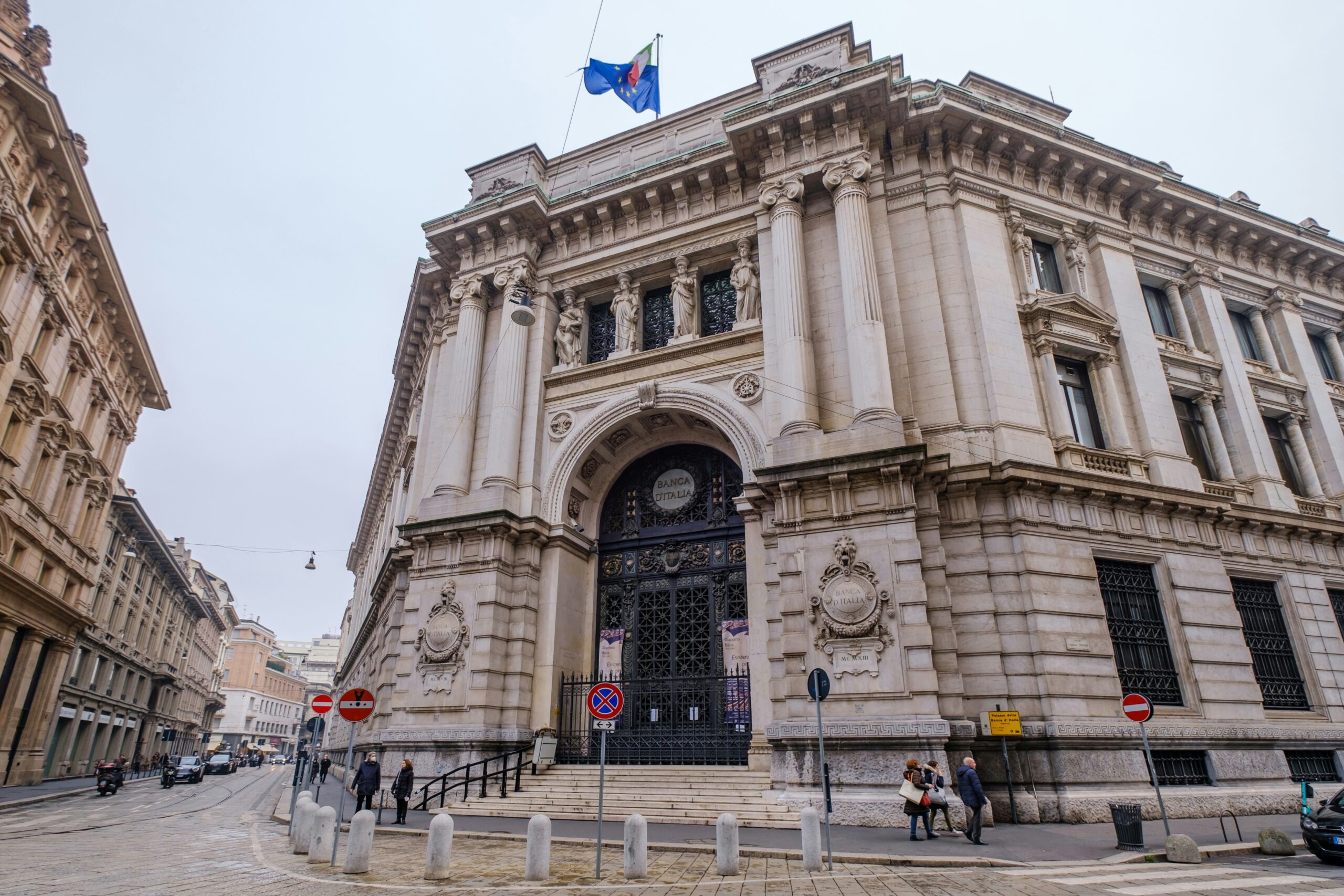
The practical banking sequence for retirees
The order matters. Banking is easier after your identity and housing situation are clear. In many cases the practical sequence is: get codice fiscale, prepare ID, secure a usable address, gather pension or income proof, then apply for a bank account or payment setup that works for local contracts.
Trying to open an account without a codice fiscale, without clear address proof, or with inconsistent name details can create delays. The bank may ask for passport, codice fiscale, residence or address information, tax residence details, pension or income proof, and sometimes a reason for opening the account.
Retirees should keep these documents both printed and scanned. A tidy document folder matters. Italy is not impossible, but it rewards preparation and punishes “I have it somewhere in my email”.
Codice fiscale and name consistency
The codice fiscale is not a minor administrative detail. It appears across contracts, banking records, tax communication, healthcare registration, utilities, insurance and property paperwork. If your name, surname, birth place or birth date is written differently across documents, the problem may appear later in a completely different place.
This is especially relevant for retirees with middle names, married names, double surnames, accents or different spelling conventions between countries. A small mismatch may be accepted by one bank clerk and rejected by another office later.
Before opening accounts and signing contracts, check that your codice fiscale certificate, passport, lease, bank profile and later healthcare documents use consistent identity details.
Retiree reality check
Do not judge your Italian banking setup by whether your card works at a café. Judge it by whether rent, utilities, tax payments, insurance, healthcare refunds and official notices work without repeated explanations.
Traditional banks, online banks and Poste Italiane
Traditional Italian banks can be useful if you expect to buy property, manage larger transfers, need in-person support, want a debit card that local offices recognize, or prefer someone who can help with paperwork. The downside is that fees, branch processes and appointment systems can feel old-fashioned compared with modern fintech apps.
Online banks can be cheaper and faster, but they may be less helpful when a notary, landlord, local utility provider, insurance office or municipality wants old-style documentation, a stamped statement, a domestic-looking account, or branch support.
Poste Italiane also matters. It is not just mail. In many towns, Poste Italiane is a payment point, financial-service provider and place where retirees encounter queues, postal notifications, payment slips and local administrative routines. For some retirees it is convenient; for others it becomes a symbol of Italian waiting-room life.

Wise, Revolut and the foreign IBAN trap
Wise and Revolut can be very useful during a move to Italy. They can help with currency conversion, pension transfers, travel spending, keeping moving costs separate and avoiding poor exchange-rate spreads from traditional banks.
The trap is assuming they replace every Italian banking need. A foreign or non-Italian euro IBAN may work for many SEPA transfers, but some landlords, insurance providers, utility companies, agencies or local administrators may push back in practice. Sometimes the system accepts the IBAN. Sometimes the person filling in the form does not.
The best setup for many retirees is layered: keep the home-country pension account, use Wise or Revolut for currency conversion and transfer efficiency, and maintain an Italian account or locally accepted payment route for rent, utilities, taxes, insurance and predictable direct debits.
SEPA should help, but local friction still happens
In theory, euro payments across SEPA should be straightforward. In practice, retirees may still face “IBAN discrimination” in soft form: a clerk who says the form only accepts Italian IBANs, a landlord who does not trust a foreign account, a utility form that fails, or an office that asks for a different payment method.
This does not mean every retiree must open an Italian bank account immediately. It means you should not build your entire retirement plan on the assumption that every local actor will handle foreign payment details smoothly.
If you use a foreign IBAN, keep a backup plan. That may be an Italian account, a local bank transfer option, card payment, PagoPA payment, postal payment or help from a local accountant or administrator.
Rent deposits, landlords and proof of payment
Renting is often where banking friction first appears. A landlord may ask for deposit, first month, proof of funds, bank statement, codice fiscale, passport and sometimes evidence that the tenant can pay reliably. Retirees with pensions from abroad may need to explain income that does not look like an Italian salary.
Keep payment records. Use traceable transfers. Avoid large informal cash arrangements. Make sure the name on the payment matches the tenant and lease. If a deposit is paid from a spouse’s account, clarify it in writing.
For retirees, the goal is not only to pay. The goal is to create a clean record that supports later residence, utilities, local registration and tax clarity.
Utilities, direct debits and the first-year bill calendar
Electricity, gas, water, internet, mobile plans, condominium charges and waste-related costs may all have different payment channels. Some bills may use direct debit. Others may use bank transfer, card, payment slips, PagoPA, online portals or local counters.
The dangerous period is the first year. You do not yet know the billing rhythm. Some costs are monthly. Others are every two months, quarterly, annual or irregular. Some arrive by email or portal. Others may arrive by post.
Create a simple bill calendar from the beginning: rent, condominium fees, electricity, gas, water, waste tax, internet, mobile phone, insurance, car tax, healthcare insurance, accountant, home-country obligations and annual renewals. Italy is manageable, but missed bills and unfamiliar payment channels create unnecessary stress.

PagoPA, F24 and payments that confuse newcomers
Retirees may encounter payment systems that are unfamiliar at first. PagoPA is used for many public administration payments. F24 forms are used for various tax and contribution payments. Local taxes, car-related payments, municipal charges and administrative fees may not feel like ordinary online shopping payments.
This is where a local bank, accountant, CAF, patronato, property administrator or experienced helper can save time. The problem is rarely that the payment is impossible. The problem is knowing which channel to use, what the reference code means, whether the deadline matters, and whether proof of payment must be kept.
Do not throw away receipts. Keep PDFs, screenshots and paper receipts for important payments. In Italy, the ability to prove that something was paid can matter long after the payment was made.
ATM access, cards and cash habits
Card payments are common in Italy, but cash still matters more than many retirees expect, especially in smaller towns, markets, parking, local services, small cafés, tradespeople and informal situations. You do not need to carry large amounts, but you should not rely on one foreign card as your only payment method.
Check ATM fees, withdrawal limits, foreign-card fees and whether your card works reliably at local machines. Some retirees keep two cards from different providers plus a small cash buffer at home for emergencies.
Be especially careful when your pension or savings are in another currency. ATM withdrawals, poor exchange rates and bank spreads can quietly become expensive over a full retirement year.
Currency conversion and pension transfers
Retirees from outside the euro area should treat currency conversion as a recurring retirement cost, not a one-time moving issue. Pension income, savings transfers and large property payments can all be affected by exchange-rate timing and transfer fees.
Do not transfer large sums casually through the first route your home bank offers. Compare exchange rates, fees, transfer speed, receiving-bank charges and documentation requirements. Wise, Revolut and specialist currency providers may be useful, but larger property or notary-related transfers require extra care and clean records.
A practical approach is to hold a buffer in euros for several months of living costs. This avoids being forced to exchange money during a poor exchange-rate week just because a bill arrived.
Buying property: banking becomes more serious
If you buy property in Italy, banking becomes much more than a monthly-payment issue. You may need traceable transfers, anti-money-laundering documentation, proof of funds, notary coordination, tax payments, purchase deposits and clear documentation showing where money came from.
Large transfers should be planned early. Banks may ask questions. Transfer providers may need verification. Notaries may need funds to arrive in a specific way and on time. A small delay that would not matter for a normal bill can become a serious problem during a property purchase.
Retirees buying property should involve the notary, bank and any currency-transfer provider early enough that the payment route is tested before the completion deadline.
Taxes, pensions and why an accountant can be worth it
Moving to Italy can affect tax residence, pension taxation, reporting obligations, foreign accounts, property income, investment accounts and inheritance planning. Banking records become part of that picture.
Retirees should not rely on bank staff for tax advice. A bank may help with payments, but tax residence and pension treatment require proper advice. An accountant familiar with foreign retirees can help avoid mistakes around declaration requirements, double-taxation issues, property costs and annual deadlines.
This is especially important if you keep accounts in another country, receive pensions from multiple sources, own property abroad, rent out a former home or transfer large savings into Italy.
Poste Italiane: useful but not always fast
Many retirees encounter Poste Italiane for more than mail. It can be involved in payments, accounts, postal notifications, registered letters, collection slips and local administrative routines. In smaller towns, the post office may be one of the main public-facing service points.
The advantage is accessibility. The disadvantage is queuing, local procedures, appointment systems and paperwork. A retiree used to instant online banking may find it slow. A retiree who likes face-to-face service may find it reassuring.
The practical advice is to understand what Poste Italiane can help with locally, but not rely on it as your only plan for urgent or complex banking needs.
Security, scams and elderly vulnerability
Retirees should treat banking security seriously, especially when dealing with language barriers, new payment systems and unfamiliar offices. Be cautious with links in text messages, fake bank calls, pressure to transfer money, unofficial helpers and anyone who asks for card details, PINs or login codes.
Set up two-factor authentication before you need it. Keep a secure list of bank contact numbers. Make sure a trusted person knows how to help in an emergency without having access to everything. Use strong passwords and avoid managing large transfers over public WiFi.
If you are moving as a couple, both partners should understand the banking setup. It is risky if only one person knows how pensions arrive, bills are paid, cards work and emergency funds are accessed.
Practical retirement banking checklist
- Get the codice fiscale before signing serious contracts.
- Keep passport, pension proof, address proof and tax-residence details ready.
- Use Wise or Revolut for transfer efficiency if useful, but not as your only plan.
- Consider an Italian account for rent, utilities, local taxes, insurance and direct debits.
- Create a first-year bill calendar for monthly, quarterly and annual payments.
- Keep receipts for PagoPA, F24, municipal payments and important transfers.
- Check ATM fees and keep more than one card available.
- Hold a euro buffer so exchange rates do not force bad timing.
- Use an accountant for tax-residence and pension questions.
- Make sure both partners understand the banking setup.
Best practical strategy for retirees
The best banking strategy in Italy is boring resilience. Do not chase the cheapest app if it creates problems with rent, utilities or local offices. Do not rely only on a home-country account if you plan to live in Italy long term. Do not transfer large amounts without records and planning.
Build a layered setup: pension income remains traceable, currency conversion is handled efficiently, Italian payments work locally, bills are tracked, and tax records are clean. That may sound less exciting than choosing a modern app, but it is what prevents banking from becoming a recurring retirement headache.
For retirees, the right bank is not the most stylish one. It is the one that lets Italian life run quietly in the background.