Driving and Car Ownership in Italy for Retirees
Driving in Italy can make retirement easier in the countryside, but it can also create paperwork, parking stress, ZTL fines, insurance problems and long-term mobility issues if you choose the wrong location.
For retirees, the car decision is really a location decision. The safest setup is a place where driving remains useful, but daily life does not completely collapse if driving becomes harder later.
The car decision should come before the final location decision
For retirees, driving in Italy is not just about road rules. It affects where you can live, how easily you can reach doctors, whether a rural house is still practical at age 75, how much bureaucracy you are willing to handle, and whether a cheap property becomes expensive because every appointment requires a car.
The real question is not “Do I want a car in Italy?” The better question is: “Will I still want to drive from this home to a pharmacy, doctor, hospital, supermarket, train station and tax office in five or ten years?”
The car decision is really a location decision
Italy has several completely different driving realities. A retiree living in central Bologna, Turin, Florence or Milan may find a car expensive and unnecessary. A retiree living outside a hill town in Umbria, Abruzzo, Le Marche, Calabria or inland Sicily may find that life without a car becomes difficult very quickly.
Public transport, taxis and walkability may make ownership more burden than benefit.
A car may become household infrastructure, like heating, internet or a reliable pharmacy.
Steep streets, winter rain, night driving and limited buses can become tiring.
What feels manageable at 63 may feel very different at 78.

Retiree reality check: a rural house may look peaceful in May. In November, the same house may mean dark roads, rain, steep driveways, limited buses and a 35-minute trip for basic errands.
Where a car helps — and where it becomes a liability
A car helps with weekly shopping, medical appointments, specialists, hospitals, bulky items, airport trips and social visits between villages.
Some buses are built around school or worker schedules rather than retiree errands.
Parking may be scarce, garages expensive, streets narrow and access rules difficult to understand.
Rome, Florence, Bologna, Naples, Milan and many historic towns can make ownership frustrating and expensive.
Common pattern: some retirees start with a car and sell it after learning local buses, trains, taxis, delivery services and walkable routines. Others move too far out, discover the bus is impractical, and need to buy a car under pressure.
ZTL zones: the fine that arrives later
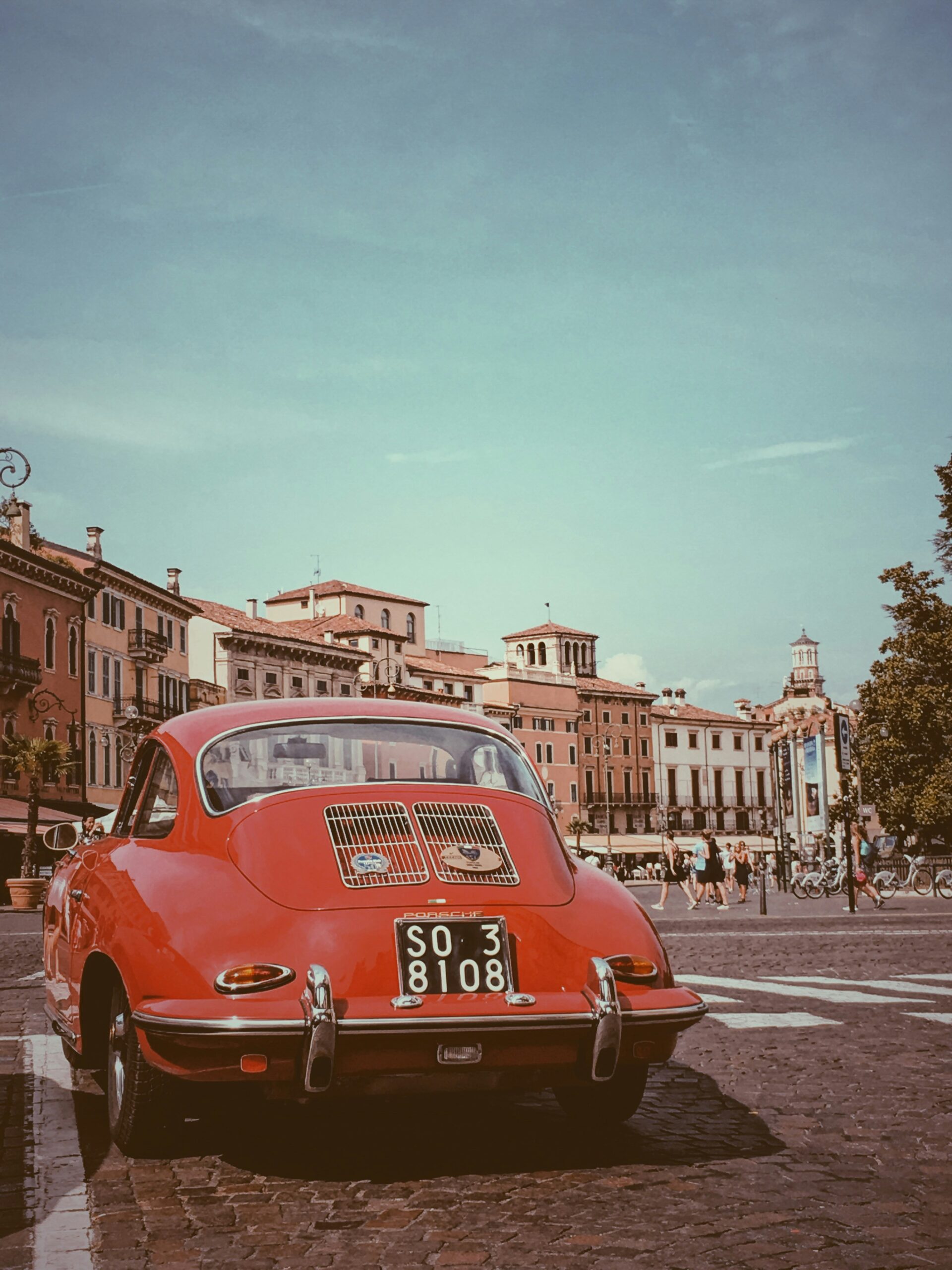
Many Italian historic centres have ZTL areas, or zone a traffico limitato. These are restricted traffic zones where private vehicles may be banned or allowed only at specific times, for residents, delivery vehicles, taxis or permit holders.
The practical problem is that rules are local. Navigation apps can still route you toward a street where you are not allowed to drive, and camera-controlled fines may arrive long after the trip.
Before renting or buying in a historic centre: ask whether residents can get permits, where visitors park, whether taxis and deliveries can enter, and whether your doctor or pharmacy is inside a restricted zone.
Parking is often the real daily problem
Many retirees focus on whether the roads are safe. In daily life, parking may be the bigger issue. Historic centres were not designed for modern car ownership, coastal towns can become difficult in summer, apartment buildings may not include private parking, and rural homes may have access roads that are awkward in rain.
If a property listing says “parking nearby”, treat that as a question, not an answer. Nearby can mean a private garage, a resident permit zone, paid street parking, a steep walk from a public lot, or “good luck in August”.

Revisione, insurance and bollo: the recurring ownership layer
Purchase price is only the beginning. Retirees should budget for insurance, bollo, maintenance, tyres, inspections, parking, tolls, possible garage rent, repairs and occasional fines.
Importing a car vs buying locally
Bringing a familiar car from another European country can feel sensible, especially if it is reliable and already paid for. But importing is not always the simplest option once registration, technical conformity, paperwork, insurance and local servicing are considered.
Especially if the car is reliable, suitable and worth the registration process.
Local registration, insurance and servicing may be easier once you know the area.
Comfortable on motorways but poor for narrow villages, garages and old-town parking.
Urban restrictions and emissions categories may reduce long-term practicality.
Buying a used car in Italy: what retirees should check
Practical beats premium: many retirees are better served by a modest, easy-to-park car than by a larger premium vehicle.
Motorways, tolls, cameras and fines
Italy’s motorway network can be excellent for regional travel, hospital access, airport trips and visiting family. But it also adds tolls, fuel costs and driving fatigue to retirement life.
Useful for long-distance access but expensive if used often.
Useful for frequent drivers, but occasional drivers may manage with normal toll lanes.
Do not assume enforcement is absent because local drivers seem relaxed.
Average-speed motorway enforcement can catch mistakes after the fact.
Simple rule: drive like the fine will arrive later, because sometimes it will. Be especially cautious around town entrances, speed changes, school zones, ZTL boundaries and controlled motorway sections.
Regional differences: Italy is not one driving environment
Driving in Italy varies sharply by region and local geography. Northern cities may offer stronger public transport and stricter urban restrictions. Central hill towns may combine beautiful living with steep roads and limited parking. Southern rural areas may make a car essential, but mechanics, public transport and specialist healthcare may be more spread out.
Aging changes the calculation
A car that feels liberating at 63 can feel burdensome at 78. Retirees should plan for the version of themselves who may dislike night driving, heavy rain, steep roads, hospital parking, aggressive traffic or long motorway trips.
Pharmacy, grocery shop, café, bus stop and doctor on foot give you options.
A home that requires driving for everything gives you fewer options as you age.
Rail, buses, taxis, rentals or car-sharing can replace ownership in some towns.
A route may exist on paper but be useless for appointments or evening returns.
Best long-term question: would this location still work if you stopped driving or if one partner could no longer drive?
Before buying or importing a car, answer these questions
Best practical strategy for retirees
The safest approach is usually not to make a permanent car decision immediately. Rent first if possible. Test the local roads. Try shopping without a car. Visit the nearest hospital. Find out where residents actually park. Ask local residents how winter changes the area.
If you already own a suitable car in another EU country, do not assume importing is automatically wrong. But do not assume it is automatically smart either. Compare it against buying locally after you understand the area.
Choose a location where the car is useful, not mandatory
For many retirees, the best Italy car plan is simple: choose a location where you are not trapped without a car, then decide whether ownership still adds enough value to justify the cost and bureaucracy.
Driving in Italy can be useful, but retirement works best when healthcare, shopping, transport and daily life remain manageable even if driving becomes harder later.